
English
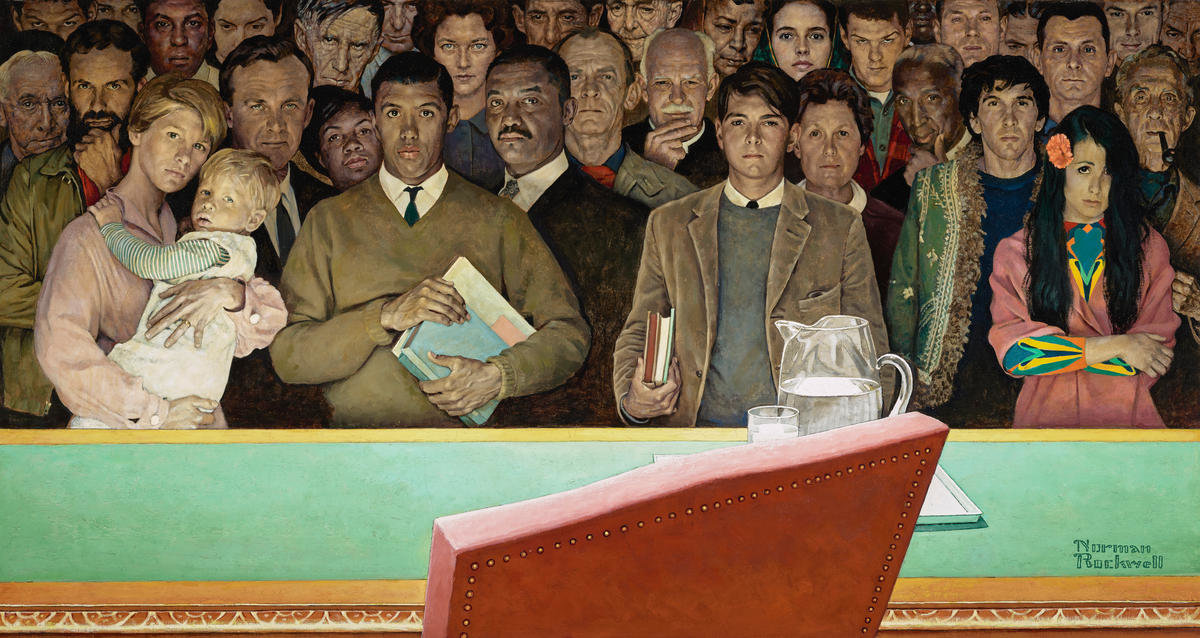
The Right to Know
Illustration for Look, August 20, 1968
Oil on canvas
By Norman Rockwell
Private Collection
© 1968 Norman Rockwell Family Agency
Narrated By:
Stephanie Haboush Plunkett
Deputy Director / Chief Curator – Norman Rockwell Museum
As with many Americans in the mid 1960s, the Vietnam War was on Norman Rockwell’s mind. In 1966, he spent a week at Quantico Marine Base in Virginia taking photos of an experienced marine with a thought of designing an image for a poster that he had been commissioned to do. But in March 1967, he wrote to the Marine Corps declining the assignment saying, “I just can’t paint a picture unless I have my heart in it.”
About a year later, Rockwell began work on The Right To Know, an editorial illustration for Look Magazine that was published in August of 1968. Just months after the painting appeared, the New York Times reported that General Westmoreland had requested 206,000 additional troops to be sent to Vietnam, a story that the White House had tried to suppress.
After troop escalation was reported, news of the My Lai Massacre broke, fueling growing dissent against the war. Rockwell’s political statement expressed the right of American citizens to understand their government’s actions. Of his work during that period, Rockwell said, “I don’t think my style has changed, but America has and hence, so has my subject matter. Lord knows we have problems, plenty of them, but we should also have great confidence in the present generation of young people who are, I think, the very best we have produced, long hair and all. Who is to say that one of these hippies won’t be a genius of the future?”
In his illustration, Rockwell presents a group of people of many races, ages, and political persuasions. His format of massing people from all walks of life was also used in two other works in this exhibition, a drawing created in 1953 relating to the United Nations and the peoples of the world, and in his famous Saturday Evening Post cover illustration, Golden Rule, published in 1961, which portrayed the peoples of the world united under the phrase, “Do onto others as you would have them do onto you.”
Norman Rockwell who was 74 years old when he painted this work, felt so strongly about this painting that he had included himself in the work on the far right side with his signature pipe in his mouth.
Spanish
The right to know (El derecho a saber)
Ilustración para Look, 20 de agosto de 1968
Óleo sobre lienzo
Por Norman Rockwell
Colección privada
© 1968 Norman Rockwell Family Agency
Narrado por:
Stephanie Haboush Plunkett
Directora Adjunta/Curadora Jefe – Museo Norman Rockwell
Al igual que con muchos estadounidenses a mediados de la década de 1960, la guerra de Vietnam estaba en la mente de Norman Rockwell. En 1966, pasó una semana en la base de marina de Quantico en Virginia tomando fotos de un infante de marina experimentado con la idea de diseñar una imagen para un póster que le habían encargado. Pero en marzo de 1967, escribió al Infantería de Marina declinando la tarea diciendo, “No puedo pintar una imagen a menos que tenga mi corazón en ella”.
Alrededor de un año después, Rockwell comenzó a trabajar en The Right To Know, una ilustración editorial para la revista Look que se publicó en agosto de 1968. Pocos meses después de que apareciera la pintura, el New York Times informó que el general Westmoreland había solicitado 206,000 tropas adicionales para ser enviadas a Vietnam, una historia que la Casa Blanca había intentado reprimir.
Después de que se informó de la escalada de tropas, las noticias de la masacre de My Lai fueron dadas, alimentando el creciente disentimiento en contra de la guerra. La declaración política de Rockwell expresaba el derecho de los ciudadanos estadounidenses a comprender las acciones de su gobierno. De su trabajo durante ese período, Rockwell dijo: “No creo que mi estilo haya cambiado, pero Estados Unidos sí y, por lo tanto, también mi tema. Dios sabe que tenemos problemas, muchos de ellos, pero también debemos tener una gran confianza en la generación actual de jóvenes que, creo, son lo mejor que hemos producido, con pelo largo y todo. ¿Quién puede decir que uno de estos hippies no será un genio del futuro?
En su ilustración, Rockwell presenta un grupo de personas de muchas razas, edades y convicciones políticas. Su formato de juntar personas de todos los ámbitos de la vida también se utilizó en otras dos obras de esta exposición, un dibujo creado en 1953 sobre las Naciones Unidas y los pueblos del mundo, y en su famosa ilustración de la portada del Saturday Evening Post, Golden Rule (Regla de Oro), publicado en 1961, que retrata a los pueblos del mundo unidos bajo la frase, “Haz a los demás lo que quieras que te hagan”.
Norman Rockwell, que tenía 74 años cuando pintó esta obra, tenía tanta confianza en esta pintura que se había incluido en el trabajo en el extremo derecho con su exclusiva pipa en la boca.
French
Le Droit de Savoir
Illustration pour Look, 20 août 1968
Huile sur toile
Par Norman Rockwell
Collection privée
© 1968 Norman Rockwell Agence familiale
Raconté Par :
Stephanie Haboush Plunkett
Directeur Adjoint / Conservateur en Chef – Musée Norman Rockwell
Comme de nombreux Américains au milieu des années 1960, la guerre du Vietnam était dans l’esprit de Norman Rockwell. En 1966, il a passé une semaine à la base marine de Quantico, en Virginie, prenant des photos d’un marin expérimenté en pensant à concevoir une image pour une affiche qu’il avait été chargé de faire. Mais en mars 1967, il a écrit au Corps des Marines refusant l’affectation en disant : « Je ne peux pas peindre une image à moins que je puisse le faire avec tout mon cœur.
Environ un an plus tard, Rockwell commença à travailler sur Le droit de Savoir, une illustration éditoriale de Look Magazine publiée en août 1968. Quelques mois après la parution du tableau, le New York Times rapporta que le général Westmoreland avait demandé que 206 000 soldats supplémentaires soit envoyé au Vietnam, une histoire que la Maison Blanche avait essayé de réprimer.
Après l’annonce de l’escalade des troupes, les nouvelles du massacre de My Lai était révélé, alimentant la descente croissante contre la guerre. La déclaration politique de Rockwell exprimait le droit des citoyens américains à comprendre les actions de leur gouvernement. De son travail durant cette période, Rockwell a dit : « Je ne pense pas que mon style a changé, mais l’Amérique a et, par conséquent, mon sujet a aussi beaucoup d’importance, mais nous devrions aussi avoir une grande confiance dans la génération actuelle des jeunes qui sont, je pense, les meilleurs que nous ayons produits, cheveux longs et tout … Qui peut dire qu’un de ces hippies ne sera pas un génie du futur ?
Dans son illustration, Rockwell présente un groupe de personnes de plusieurs races, âges et convictions politiques. Son format de rassembler des gens de tous horizons a également été utilisé dans deux autres œuvres de cette exposition, un dessin créé en 1953 concernant les Nations Unies et les peuples du monde, et dans sa célèbre illustration de la couverture du Saturday Evening Post, Golden Rule, publié en 1961, qui dépeignait les peuples du monde unis sous la phrase : “Faites aux autres ce que vous voudriez qu’ils fassent à vous”.
Norman Rockwell, qui avait 74 ans quand il a peint cette œuvre, a tellement ressenti cette peinture qu’il s’était incliné dans le travail à l’extrême droite avec sa pipe signature dans sa bouche.
German
The Right to Know (Das Recht auf Information)
Illustration für Look, 20. August 1968
Öl auf Leinwand
Von Norman Rockwell
Privatsammlung
© 1968 Norman Rockwell Family Agency
Erzählt von:
Stephanie Haboush Plunkett
Stellvertretende Leiterin / Chefkuratorin – Norman Rockwell Museum
Wie auch viele andere Amerikaner beschäftigte den Künstler Norman Rockwell Mitte der 1960er-Jahre der Vietnamkrieg. 1966 verbrachte er eine Woche in der Marinebasis Quantico in Virginia und schoss Fotos von einem erfahrenen Marinesoldaten, um ein Bild für ein Plakat zu entwerfen, mit dessen Gestaltung er beauftragt worden war. Im März 1967 aber schrieb er an das Marinekorps, dass er den Auftrag ablehne: „Ich kann einfach kein Bild malen, wenn ich nicht selbst mit dem Herzen dabei bin.“
Ungefähr ein Jahr später begann Rockwell mit der Arbeit an seinem Werk The Right To Know (Das Recht auf Information), einer redaktionellen Illustration für die Zeitschrift Look, die im August 1968 veröffentlicht wurde. Nur Monate, nachdem das Gemälde erschienen war, meldete die New York Times, dass General Westmoreland die Entsendung weiterer 206 000 Soldaten nach Vietnam gefordert hatte, eine Geschichte, die man im Weißen Haus gern für sich behalten hätte.
Nachdem von der Truppenausweitung berichtet worden war, verbreitete sich die Nachricht über das Massaker von My Lai, was den wachsenden Unmut gegen den Krieg noch weiter anheizte. Rockwells politische Stellungnahme brachte das Recht der amerikanischen Bürger zum Ausdruck, über die Vorgehensweise und die Absichten der Regierung informiert zu werden. Über seine Arbeit in dieser Zeit äußerte sich Rockwell folgendermaßen: „Ich glaube nicht, dass sich mein Stil verändert hat, aber Amerika hat es und so auch mein Thema. Wir haben weiß Gott Probleme genug, aber wir sollten auch Vertrauen in die heutige Generation junger Menschen haben, die, wie ich finde, das Beste ist, was wir hervorgebracht haben – lange Haare hin oder her. Wer kann sagen, ob sich unter diesen Hippies nicht ein zukünftiges Genie befindet?“
In seiner Illustration stellt Rockwell eine Gruppe von Menschen verschiedener Rassen, Altersklassen und politischer Überzeugungen dar. Dieses Format, bei dem er Menschen aus allen Gesellschaftsschichten versammelte, findet sich auch bei zwei anderen Werken dieser Ausstellung wieder – einer Zeichnung aus dem Jahr 1953 im Zusammenhang mit den Vereinten Nationen und den Völkern der Erde und bei seiner berühmten Titelblatt-Illustration für die Saturday Evening Post, Golden Rule (Goldene Regel), die 1961 veröffentlicht wurde und die Völker der Welt porträtierte, vereint unter dem Spruch „Do onto others as you would have them do onto you“ („Was du nicht willst, das man dir tu’, das füg’ auch keinem andern zu“).
Norman Rockwell, der 74 Jahre alt war, als er dieses Bild malte, bedeutete das Gemälde so viel, dass er sich selbst auf dem Werk darstellte – ganz rechts mit der für ihn typischen Pfeife im Mund.
Japanese
The Right to Know
知る権利
Illustration for Look, August 20, 1968
1968年8月20日、「ルック」のイラスト
Oil on canvas
キャンバスに油彩
By Norman Rockwell
ノーマン・ロックウェル
Private Collection
プライベートコレクション
© 1968 Norman Rockwell Family Agency
©1968ノーマンロックウェルファミリーエージェンシー
Narrated By: Stephanie Haboush Plunkett
Deputy Director / Chief Curator – Norman Rockwell Museum
ステファニー・ハボース・プランケットによるナレーション付き
副所長/チーフキュレーター – ノーマンロックウェル博物館
As with many Americans in the mid 1960s, the Vietnam War was on Norman Rockwell’s mind.
1960年代半ばの多くのアメリカ人と同様に、ベトナム戦争はノーマンロックウェルの心にありました。
In 1966, he spent a week at Quantico Marine Base in Virginia taking photos of an experienced marine with a thought of designing an image for a poster that he had been commissioned to do.
1966年、彼はヴァージニアのクオンティコ海兵隊基地で一週間、経験豊富な海洋の写真を撮り、ポスターのイメージをデザインしました。
But in March 1967, he wrote to the Marine Corps declining the assignment saying, “I just can’t paint a picture unless I have my heart in it.”
しかし、1967年3月、彼は「私の絵に心がない限り私は絵を描くことができません」と書き、海兵隊に任務を辞退する旨を申し出ました。
About a year later, Rockwell began work on The Right To Know, an editorial illustration for Look Magazine that was published in August of 1968.
約1年後、ロックウェルは、1968年の8月に出版されたルックマガジンの編集イラスト「知る権利」の作業を開始しました。
Just months after the painting appeared, the New York Times reported that General Westmoreland had requested 206,000 additional troops to be sent to Vietnam, a story that the White House had tried to suppress.
絵画が登場したわずか数ヶ月後、ニューヨークタイムズ紙はウェストモアランド将軍が、ベトナムに20万6000人の追加兵隊を派遣するよう要求していたと報道しました。これはホワイトハウスが封じ込もうと思っていた件でした。
After troop escalation was reported, news of the My Lai Massacre broke, fueling growing descent against the war.
兵力の増強が報告された後、マイライ大虐殺のニュースが報道され、戦争に対する反感が増しました。
Rockwell’s political statement expressed the right of American citizens to understand their government’s actions.
ロックウェルの政治声明は、政府の行動をアメリカ国民が理解する権利を表明しました。
Of his work during that period, Rockwell said, “I don’t think my style has changed, but America has and hence, so has my subject matter. Lord knows we have problems, plenty of them, but we should also have great confidence in the present generation of young people who are, I think, the very best we have produced, long hair and all. Who is to say that one of these hippies won’t be a genius of the future?”
彼は仕事の合間に、「私は自分のスタイルが変わったとは思わないが、私の主題はアメリカと同じだ。主は私たちに多くの問題があることを知っている。だが、私たちは若者の今の世代に大きな自信を持つべきだと思う。私が思うには、私たちが作り出した最高のもの、知識人、それら全て、これらのヒッピーのうちの1人でも未来の天才にはならないと誰が言えますか?」と言いました。
In his illustration, Rockwell presents a group of people of many races, ages, and political persuasions.
イラストレーション中で、ロックウェルは、多くの人種、年齢、政治的一派の人々のグループを示しています。
His format of massing people from all walks of life was also used in two other works in this exhibition, a drawing created in 1953 relating to the United Nations and the peoples of the world, and in his famous Saturday Evening Post cover illustration, Golden Rule, published in 1961, which portrayed the peoples of the world united under the phrase, “Do onto others as you would have them do onto you.”
この展覧会では、1953年に国連と世界の人々に関連して作成された絵画と、1961年に出版され彼の有名なサタデーイブニング ポスト紙の表紙イラストであるゴールデン・ルールの「己の欲するところを人に施せ」という言葉で世界の人々を一致させました。
Norman Rockwell who was 74 years old when he painted this work, felt so strongly about this painting that he had included himself in the work on the far right side with his signature pipe in his mouth.
この作品を描いたときに74歳だったノーマン・ロックウェルは、彼自身を含めて描いたこの作業に強い思いを感じて、口にパイプをくわえながら右端に自分のサインをしました。
Chinese
知情权
《Look》插画,1968年8月20日
布面油画
创作者/诺曼·洛克威尔
私人收藏
© 1968 Norman Rockwell Family Agency
讲述人:
Stephanie Haboush Plunkett
副总监/总策展人 – 诺曼·洛克威尔博物馆
像许多20世纪60年代的美国人一样,越南战争是诺曼·洛克威尔心中的痛。1966年,他曾在弗吉尼亚匡提科海军基地待过一周,拍摄一位经验丰富的海军,思考受命设计的一幅海报。但1967年3月,他写信给海军陆战队,拒绝了这一任务并说:“我不能画一幅自己不相信的作品”。
大约一年后,洛克威尔开始创作“知情权”——一幅为《Look》 杂志创作并于1968年8月出版的社论漫画。这幅画问世一个月后,《纽约时报》报道称维斯特莫兰德将军要求增派206000名士兵前往越南的消息,这个消息曾一度被白宫试图压制。
增兵的消息被报道出后,又爆出了美莱大屠杀(My Lai Massacre)的新闻,导致反战群体不断扩大。洛克威尔的政治评论表达了美国公民有了解其政府行为的权利。洛克威尔提到那段时期的作品时说到:“我觉得我的风格没有变,但美国变了,所以我的主题也随之变了。”上帝知道我们存在问题,很多问题,但我们应该对这一代年轻人抱有信心,他们是我们最好的一代,未来很长时间依然如此。谁敢说这些嬉皮士里没有未来的天才呢?”
在其插画中,洛克威尔介绍了各个种族、年龄段和不同党派的人。他刻画各界人士的方法也运用在此次展览的另外两幅作品中,一幅是1953年创作的与联合国和世界人民有关的插画,另一幅是他为《星期六晚报》创作的封面插画《黄金法则》,于1961年出版,并标有这样一句话:“己所不欲,勿施于人”。
诺曼·洛克威尔创作这幅作品时已是74岁高龄;他非常喜欢这幅作品,因此他把自己也画进了这幅作品,就在最右侧,嘴上叼着他标志性的烟斗。
Arabic
الحق في المعرفة
رسم لجريدة “لوك”، 20 أغسطس 1968
رسم زيتي على القماش
لـ نورمان روكويل
مجموعة خاصّة
وكالة نورمان روكويل العائلية 1968 ©
الراوي:
ستيفاني هابوش بلونكيت
نائب مدير / رئيسة أمناء المتحف – متحف نورمان روكويل
كما هو الحال مع العديد من الأمريكيين منتصف الستينات، كانت حرب فيتنام تشغل بال نورمان روكويل. في سنة 1966 قضى أسبوعا في قاعدة “كوانتيكو” البحرية بفرجينيا وأخذ صورا لجندي بحرية محنّك بنيّة تصميم صورة لملصق كُلِّف بإنجازه. لكن في شهر آذار مارس 1967 كتب لسلاح مشاة البحرية ليعبّر عن رفضه للمهمة قائلا: “لا يمكنني رسم صورة مادام قلبي ليس معها.”
بعدها بحوالي سنة، بدأ روكويل في العمل على “الحق في المعرفة”، وهو رسم افتتاحي لمجلة “لوك” نُشر في أغسطس سنة 1968. بعد مرور أشهر من ظهور الصورة، كشفت جريدة “نيويورك تايمز” أنّ الجنرال “وستمورلاند” أمر بإرسال 206.000 جنديّ إضافي إلى فيتنام، وهي القصة التي أراد البيت الأبيض كتمانها.
بعد الكشف عن زيادة عدد الجنود، جاءت أخبار “مجزرة ماي لاي” التي أججت من الاستنكار المتزايد للحرب. عبّر بيان روكويل السياسي عن حقّ المواطنين الأمريكيين في فهم أفعال حكومتهم. قال روكويل بخصوص عمله في تلك الفترة: “لا أعتقد أنّ أسلوبي قد تغيّر، لكن أمريكا تغيّرت وتغيّر معها موضوعي. الرب يعلم أن لدينا مشاكل، الكثير منها، لكن يجب أن تكون لدينا أيضا ثقة كبيرة في الجيل الحالي من الشباب الذين هم، في اعتقادي، خير من أنجبنا، الشعر الطويل وما إلى ذلك. من يتجرأ على إنكار أنّ واحدا من هؤلاء ‘الهِبي’ سيكون عبقريا في المستقبل؟”.
يعرض روكويل في صورته مجموعة من الأشخاص من أعراق، وأعمار، وقناعات سياسية مختلفة. تصميمه المتمثّل في جمع أعراق متنوعة تنوّع التجارب الحياتية استُخدِم في عملين آخرين في هذا المعرض: رسم أنجزه سنة 1953 يتعلّق بـ الأمم المتحدة وسكان العالم، إلى جانب رسم الغلاف الشهير لجريدة “ساترداي إيفنينغ بوست” تحت عنوان “القاعدة الذهبية”، والمنشور سنة 1961، والذي صوّر سكان العالم متحدين تحت العبارة: “عامل غيرك كما تريد منهم أن يعاملوك.”
كان لدى نورمان روكويل الذين بلغ من العمر 74 سنة عندما أنجز هذا العمل شعور قويّ تجاه هذه الصورة إلى درجة أنه أدرج نفسه في العمل، حيث يظهر في أقصى الجانب الأيمن واضعا غليونه المعروف في فمه.