
English
Norman Rockwell
c. 1914
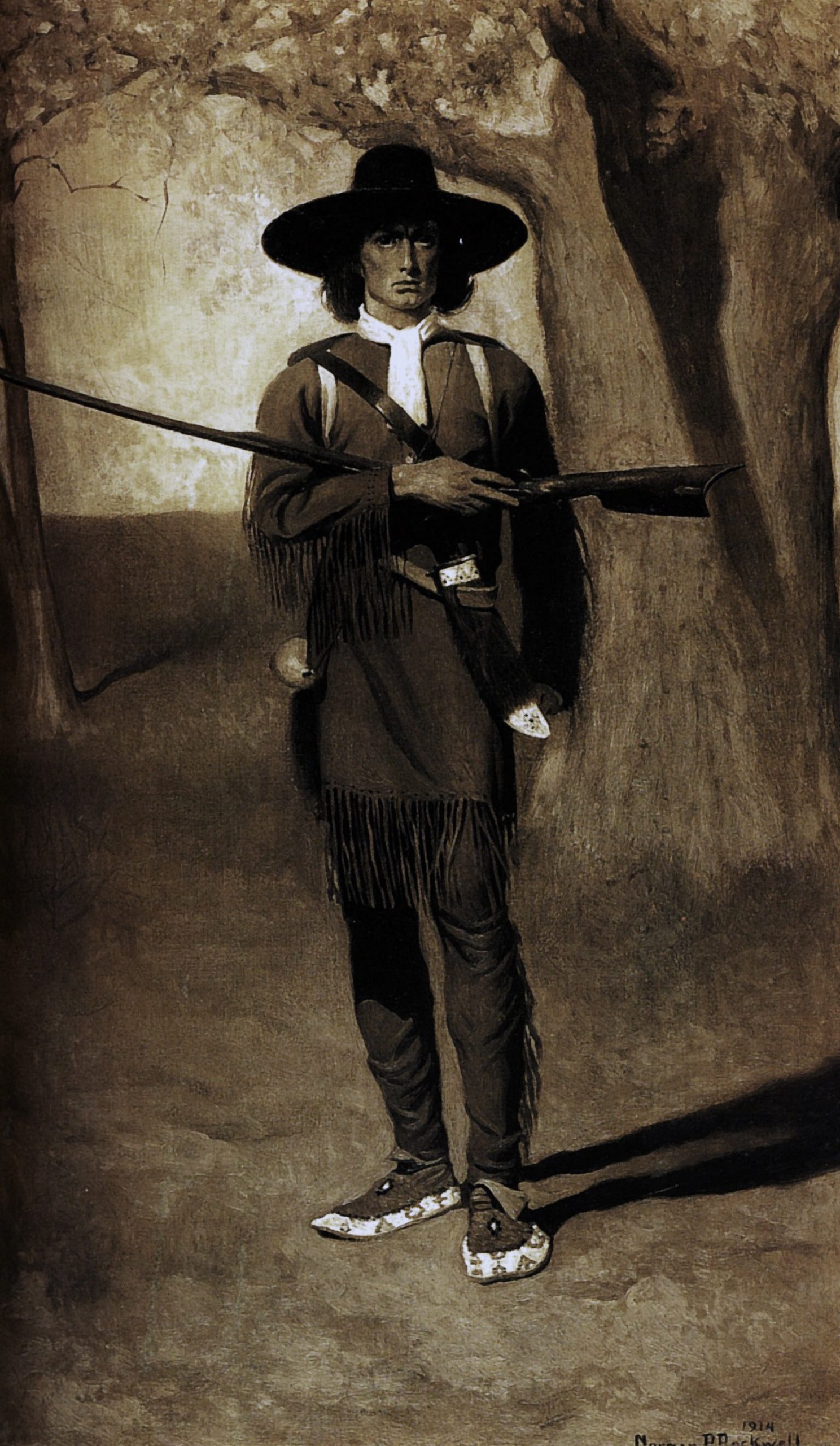
Story illustration for Boys’ Life (1914)
Oil on canvas
Adult Audio Tour
PETER ROCKWELL: In this painting from 1914, a wagon train makes its way through the wilderness. There’s no trail to follow, but they do have someone who knows the way. The lone man in the dark hat is Daniel Boone. The travelers are heading from Clinch, Virginia to a new settlement in Kentucky. It will be their job to clear the way and make the new road.
My father painted this illustration for Boys’ Life, the magazine published by the Boy Scouts of America.
Linda Pero:
LINDA PERO: In these early years, he was learning from the other great illustrators such as Howard Pyle, … and in fact, … “The Road Led Through the Passes of the Hills” — the composition– … is based on a Howard Pyle painting … of Connecticut settlers … entering the Western Reserve, which was a Scribner’s magazine story in 1902. … Rockwell would take these other illustrator’s work and borrow from them certain elements, in this case composition.
Family
Norman Rockwell
c. 1914
Story illustration for Boys’ Life (1914)
Oil on canvas
Family Audio Tour
[NORMAN ROCKWELL CHARACTER] This picture went along with a story in Boys’ Life Magazine about the pioneer Daniel Boone. That’s Daniel, walking on the right. That big hat of his was good shade on a sunny day. You can just see the tip of his nose sneaking out into the sun. The story was “serialized.” That meant you only got a little bit in each issue of the magazine, sort of like the episodes of a mini-series today on TV. It took eight months of magazines to find out the end of the story!
It was called “Daniel Boone: Pioneer Scout”–and that’s what he’s doing here. He’s leading a group of men from Virginia to Kentucky. Back then, that was way out in the wilderness. Look in the bottom right corner. I painted an animal skull in the grass to make it seem a little scarier. There weren’t any roads, so you had to hire someone to show you the way. The men in the wagon are going to build the new road, so settlers can follow.
Spanish
Norman Rockwell
c. 1914
Story illustration for Boys’ Life (1914)
Oil on canvas
Spanish Adult Audio Tour
Peter Rockwell: En esta pintura de 1914 una fila de carretas avanza a través de un paisaje silvestre. No hay sendero alguno, pero los viajeros cuentan con la presencia de alguien que conoce el camino. El hombre solitario con el sombrero de color oscuro es Daniel Boone, y el grupo de viajeros se dirige de Clinch, Virginia, a un nuevo asentamiento en Kentucky
La labor a realizar era despejar el terreno a fin de hacer un nuevo camino. Mi padre pintó esta ilustración para Boys’ Life, la revista publicada por los Boy Scouts of America, nos habla Linda Pero.
Linda Pero: Durante estos primeros años de expresión artística estaba aprendiendo de otros grandes ilustradores como Howard Pyle. De hecho, la composición de El camino nos condujo a través de los pasos de las colinas, está basada en una pintura de Howard Pyle, en la que representó a colonizadores de Connecticut cuando ingresaban a la reserva occidental.
Hecho que inspirara un artículo en la revista Scribner’s en 1902. Rockwell solía tomar la obra de otros ilustradores y pedirles prestado algunos elementos, en este caso la composición.
Spanish Family
Norman Rockwell
c. 1914
Story illustration for Boys’ Life (1914)
Oil on canvas
Spanish Family Audio Tour
Norman Rockwell: Esta pintura acompañó a un artículo sobre el pionero Daniel Boone en la revista Boys’ Life. Vemos a Daniel caminando a la derecha. Su sombrero de ala ancha lo protegía de los rayos del sol. Solo puedes verle la punta de la nariz asomándose bajo el sol.
Este artículo era seriado, lo que quiere decir que solo se publicaba una parte de la historia en cada ejemplar de la revista, tal como ocurre con los episodios de las miniseries de televisión de la actualidad. Le tomó ocho meses a la revista llegar al final del relato.
Se llamaba Daniel Boone, scout pionero, y eso es precisamente lo que está haciendo en el cuadro. Guía a un grupo de hombres de Virginia a Kentucky, y en esos años ese era terreno silvestre. Mira la esquina inferior derecha. Pinté un cráneo de animal en la hierba para dar la impresión del temor que deben de haber sentido.
No había caminos, así que era necesario contratar a alguien que supiera cómo llegar. Los hombres en las carretas van a construir un nuevo camino para que los colonizadores puedan usarlo.