
English
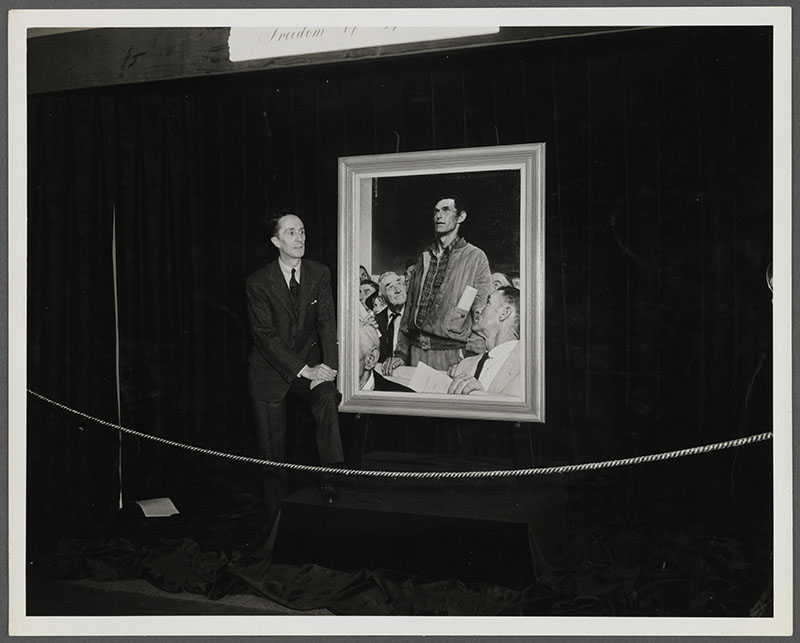
Norman Rockwell at Hecht’s Department Store,
Washington, D. C., Four Freedoms War Bond Show
Original Photo, 1943
Norman Rockwell Museum Collection
Narrated By:
James J. Kimble, Ph.D.
Associate Professor of Communication – College of Communication and the Arts
Seton Hall University
After the Saturday Evening Post introduced Norman Rockwell’s Four Freedoms paintings in four successive issues in February and March 1943, the American government took notice. The Office of War Information approached Curtis Publishing, owners of the magazine, for permission to reproduce the paintings in four million oversized posters. Those posters soon appeared in post offices, libraries, service clubs, canteens, and private homes across the United States. At the same time, the US Treasury approached the publishers with a proposal to sponsor the Four Freedoms War Bond Show, a sixteen-city traveling exhibition that would feature Rockwell’s paintings, scores of other art works, and (of course) war bond sales booths. Curtis Publishing agreed, and the first show, in Washington DC, opened in mid-1943 to great fanfare, with Rockwell himself present to sign autographs and meet well wishers. Each stop on the tour tried to offer the most visible and even outlandish promotional events, including celebrity appearances, parades, displays of military equipment, street performances, immersive advertising, and much more. By the end of the tour, in Denver during the summer of 1944, the traveling exhibition had become a huge success, not only publicizing President Roosevelt’s Four Freedoms nationwide, but also leading directly to the sale of almost $133 million in war bonds.
Spanish
Norman Rockwell at Hecht’s Department Store,
Washington, D. C., Four Freedoms War Bond Show
Norman Rockwell en la tienda por departamentos de Hecht,
Washington, D. C., Cuatro Libertades en el Programa de Bonos de Guerra
Foto original, 1943
Colección del Museo Norman Rockwell
Narrado por:
James J. Kimble, Ph.D.
Profesor Asociado de Comunicación – Facultad de Comunicación y Artes
Seton Hall University
Después de que el Saturday Evening Post presentara cuatro pinturas de Norman Rockwell en cuatro ediciones sucesivas en febrero y marzo de 1943, el gobierno estadounidense tomó nota. La Oficina de Informacion de Guerra (Office of War Information) se acercó a Curtis Publishing, los propietarios de la revista, para obtener el permiso para reproducir las pinturas en cuatro millones de afiches de gran tamaño. Esos afiches pronto aparecieron en las oficinas de correos, bibliotecas, clubes de servicio, cantinas y casas privadas en todo Estados Unidos. Al mismo tiempo, el Tesoro de EE. UU. se dirigió a los editores con una propuesta para patrocinar el Programa de Las Cuatro Libertades y Bonos de Guerra (Four Freedoms War Bond Show), que sería una exposición itinerante de dieciséis ciudades que presentaría pinturas de Rockwell, decenas de otras obras de arte y (por supuesto) puestos de venta de bonos de guerra. Curtis Publishing estuvo de acuerdo, y el primer espectáculo, en Washington DC, se inauguró a mediados de 1943 con gran fanfarria y con el propio Rockwell presente para firmar autógrafos y conocer a muchos simpatizantes. Cada parada en el recorrido trató de ofrecer los eventos promocionales más visibles e incluso extravagantes, incluyendo apariciones de celebridades, desfiles, exhibiciones de equipos militares, actuaciones callejeras, publicidad inmersiva y mucho más. Al final de la gira, en Denver durante el verano de 1944, la exhibición itinerante se había convertido en un gran éxito, no solo dando publicidad a las Cuatro Libertades del presidente Roosevelt en todo el país, sino también directamente a la venta de casi $ 133 millones en bonos de guerra.
French
Norman Rockwell au grand magasin de Hecht,
Washington, D.C., Spectacle d’obligations de guerre des quatre libertés
Photo originale, 1943
Collection du musée Norman Rockwell
Raconté par :
James J. Kimble, Ph.D.
Professeur associé de Communication – Collège de communication et des arts
Université Seton Hall
Après que le Saturday Evening Post ait présenté les tableaux des quatre libertés de Norman Rockwell dans quatre numéros successifs aux mois de février et mars 1943, le gouvernement américain a pris note. Le bureau des informations de guerre s’est approché de Curtis Publishing, propriétaires de la revue, pour avoir l’autorisation de reproduire les tableaux en quatre millions grandes affiches. Ces affiches se sont rapidement apparues aux bureaux de poste, aux bibliothèques, aux clubs philanthropiques, aux gourdes, aux résidences privées aux États-Unis. En même temps, le Trésor des États-Unis s’est approché des éditeurs avec une proposition de sponsoriser le spectacle d’obligations de guerre des quatre libertés, une exposition qui visite seize villes et qui présenterait les tableaux de Rockwell, de nombreux d’autres œuvres d’art, et bien sûr les guichets de vente d’obligations de guerre. Curtis Publishing a accepté, et le premier spectacle à Washington DC a été ouvert au milieu de 1943 en grande pompe avec la présence de Rockwell en personne pour signer des autographes et rencontrer les personnes bien intentionnées. Chaque arrêt au tour a essayé d’offrir les événements promotionnels les plus extravagants et les plus visibles, y compris les visites de célébrités, les parades, la présentation d’équipements militaires, les spectacles de rue, la publicité immersive et bien plus. Avant la fin du tour, à Denver à l’été de 1944, l’exposition itinérante était devenue un grand succès, pas seulement en faisant de la publicité aux quatre libertés du président Roosevelt partout dans le pays, mais en permettant aussi la vente l’équivalent de 133 M$ en obligation de guerre.
German
Norman Rockwell in Hechts Kaufhaus,
Washington, D. C., Four Freedoms Ausstellung für Kriegsanleihen
Originalfoto, 1943
Norman Rockwell Museum Collection
Erzählt von:
James J. Kimble, Ph.D.
Außerordentlicher Professor der Kommunikation – College of Communication and the Arts
Seton Hall University
Nachdem die Saturday Evening Post Norman Rockwells Gemälde Vier Freiheiten in aufeinanderfolgenden Ausgaben im Februar und März 1943 vorgestellt hatte, nahm die amerikanische Regierung von ihnen Notiz. Das Office of War Information wandte sich an Curtis Publishing, den Besitzern der Zeitschrift, und bat um die Erlaubnis, die Gemälde als übergroße Plakate vier-Millionen-fach zu vervielfältigen. Jene Plakate waren bald überall in den Vereinigten Staaten in Poststellen, Bibliotheken, Service-Clubs, Kantinen und in Privathäusern zu sehen. Zur gleichen Zeit wandte sich das US-Finanzministerium an die Verleger mit dem Vorschlag, die Four Freedoms Ausstellung für Kriegsanleihen zu fördern, eine Wanderausstellung durch 16 Städte, bei der die Gemälde Rockwells zu sehen wären und Bewertungen anderer Kunstwerke sowie (natürlich) Stände für den Verkauf von Kriegsanleihen vorgestellt würden. Curtis Publishing willigte ein und die erste Ausstellung, die in Washington DC gezeigt wurde, eröffnete Mitte 1943 mit großer Geste. Rockwell selbst war anwesend, gab Autogramme und traf Gratulanten. Jede Station der Wanderausstellung war bestrebt, die sichtbarsten und ausgefallensten Werbeveranstaltungen anzubieten, dazu zählten Auftritte von Prominenten, Paraden, Ausstellungen von Militärausrüstung, Straßenveranstaltungen, umfassende Werbung und vieles mehr. Abschluss der Reise war Denver im Sommer 1944. Die Wanderausstellung wurde ein riesiger Erfolg, nicht nur, dass damit Präsident Roosevelts Vier Freiheiten landesweit bekannt gemacht wurden, sondern sie führte auch unmittelbar zum Verkauf von Kriegsanleihen im Wert von beinahe 133 Millionen USD.
Japanese
Norman Rockwell at Hecht’s Department Store,
Washington, D. C., Four Freedoms War Bond Show
ヘンクのデパートでのノーマン・ロックウェル
ワシントンD.C.、4つの自由戦争債券ショー
Original Photo, 1943
オリジナルフォト、1943
Norman Rockwell Museum Collection
ノーマンロックウェルミュージアムコレクション
Narrated By:James J. Kimble, Ph.D.
Associate Professor of Communication – College of Communication and the Arts
Seton Hall University
ジェームスJキンブル Ph.D.によるナレーション付き
コミュニケーション准教授 – コミュニケーションアンドアートカレッジ
セトンホール大学
After the Saturday Evening Post introduced Norman Rockwell’s Four Freedoms paintings in four successive issues in February and March 1943, the American government took notice.
サタデイイブニングポスト紙が1943年2月と3月にノーマン・ロックウェルの4つの自由絵画を4つ連続発行した後、アメリカ政府の注意を引きました。
The Office of War Information approached Curtis Publishing, owners of the magazine, for permission to reproduce the paintings in four million oversized posters.
戦争情報局(The Office of War Information)は、雑誌の所有者であるカーティス出版社に400万枚以上のポスターを複製する許可を求めました。
Those posters soon appeared in post offices, libraries, service clubs, canteens, and private homes across the United States.
これらのポスターは、間もなく米国の郵便局、図書館、サービスクラブ、食堂、私邸に登場しました。
At the same time, the US Treasury approached the publishers with a proposal to sponsor the Four Freedoms War Bond Show, a sixteen-city traveling exhibition that would feature Rockwell’s paintings, scores of other art works, and (of course) war bond sales booths.
同時に、米国財務省は、ロックウェルの絵画、数々の芸術作品、および(もちろん)戦争債券販売ブースを特色とする16都市の旅行展である「4つの自由 戦争債券ショー」のスポンサーになる提案をして出版社に近づきました。
Curtis Publishing agreed, and the first show, in Washington DC, opened in mid-1943 to great fanfare, with Rockwell himself present to sign autographs and meet well wishers.
カーティス出版社は合意し、1943年中頃にオープンしたワシントンDCでの最初の展示会はロックウェル自身がサイン会で希望者にサインをしました。
Each stop on the tour tried to offer the most visible and even outlandish promotional events, including celebrity appearances, parades, displays of military equipment, street performances, immersive advertising, and much more.
ツアーの各停留所では、有名人の出演、パレード、軍事装備の展示、ストリート公演、没入型広告など、視覚に訴える、さらには異国的なプロモーションイベントを提供しました。
By the end of the tour, in Denver during the summer of 1944, the traveling exhibition had become a huge success, not only publicizing President Roosevelt’s Four Freedoms nationwide, but also leading directly to the sale of almost $133 million in war bonds.
ツアー終了後、1944年の夏にデンバーで開催された旅行展は、大成功しルーズベルト大統領の4つの自由を全国的に宣伝するだけでなく、約1億3,300万ドルの戦争債券の売却につながりました。
Chinese
在Hecht‘s百货店的诺曼·洛克威尔
华盛顿特区,四大自由战争债权展
原照,1943年
诺曼·洛克威尔博物馆收藏
讲述人:
James J. Kimble 博士
传媒学副教授 – 传媒与艺术学院
西东大学
1943年2月至3月,《星期六晚报》连续四期发表诺曼·洛克威尔的四大自由系列插画,引起了美国政府的注意。战时新闻处找到杂志所有者柯蒂斯出版社,要求将这些插画印成400份超大海报。这些海报很快出现在美国各个邮局、图书馆、服务俱乐部、餐厅及私人家中。同时,美国财政部找到出版方,提议赞助举办四大自由战争债权展——一个在16个城市巡回展出的展览,展览将展出洛克威尔的插画以及其它艺术作品,(当然)还有战争债券销售摊位。柯蒂斯出版社同意了这项提议,第一次展览于1943年年中在华盛顿特区开展,洛克威尔本人也出席了签名仪式并会见了好友。巡展每一站都努力带来最瞩目、最特别的推广活动,如名人出场、街道游行、军备展示、街头表演、亲身体验等形式。1944年夏天巡展最后在丹佛结束时,整个巡展非常成功,不仅在全国宣传了罗斯福总统的“四大自由”,也直接售出了1.33亿美元的战争债券。
Arabic
نورمان روكويل في متجر هيتشيت الشامل
العاصمة واشنطن، معرض سندات الحرب للحريات الأربع
صورة أصلية، 1943
مجموعة متحف نورمان روكويل
رواه:
جيمس ج. كيمبل الحاص على الدكتوراه.
أستاذ مساعد في الاتصالات – كلية الاتصالات والفنون
جامعة سيتون هول
بعد نشر مجلة ساترداي ايفيننج بوست لوحات نورمان روكويل عن الحريات الأربع في أربعة إصدارات متتالية في فبراير ومارس عام 1943، لاحظت الحكومة الأمريكية ذلك الأمر. تواصل مكتب معلومات الحرب مع دار كورتيس للنشر وهم ملاك المجلة للحصول على إذن لإعادة إنتاج اللوحات بعدد أربعة ملايين ملصق كبير الحجم. سرعان ما ظهرت هذه الملصقات في مكاتب البريد والمكتبات ونوادي الخدمة والمطاعم والمنازل الخاصة في جميع أنحاء الولايات المتحدة. وفي الوقت نفسه، تواصلت خزانة الولايات المتحدة مع الناشرين وقدموا عرضا لرعاية معرض سندات الحرب للحريات الأربع، معرض متنقل عبر ستة عشر مدينة يضم لوحات روكويل وعشرات من الأعمال الفنية الأخرى وطبعا أكشاك لبيع سندات الحرب. ووافقت دار كيرتس للنشر، وافتتح العرض الأول في العاصمة واشنطن في منتصف عام 1943 وسط ضجة كبيرة، حيث حضر روكويل نفسه للتوقيع على الأوتوغرافات ومقابلة المهنئين. حاولت كل محطة في الجولة تقديم الأحداث الترويجية الأكثر وضوحا وحتى الغريبة، بما في ذلك حضور المشاهير وعمل المواكب وعروض للمعدات العسكرية وعروض الشوارع والإعلانات الغامرة وأكثر من ذلك بكثير. وبحلول نهاية الجولة، في دنفر خلال صيف عام 1944، حقق المعرض المتنقل نجاحا كبيرا، ليس فقط نشر الحريات الأربع التي وضعها الرئيس روزفلت على الصعيد الوطني ولكن أيضا أدى مباشرة إلى بيع سندات حرب بما يقرب من 133 مليون دولار.