
English
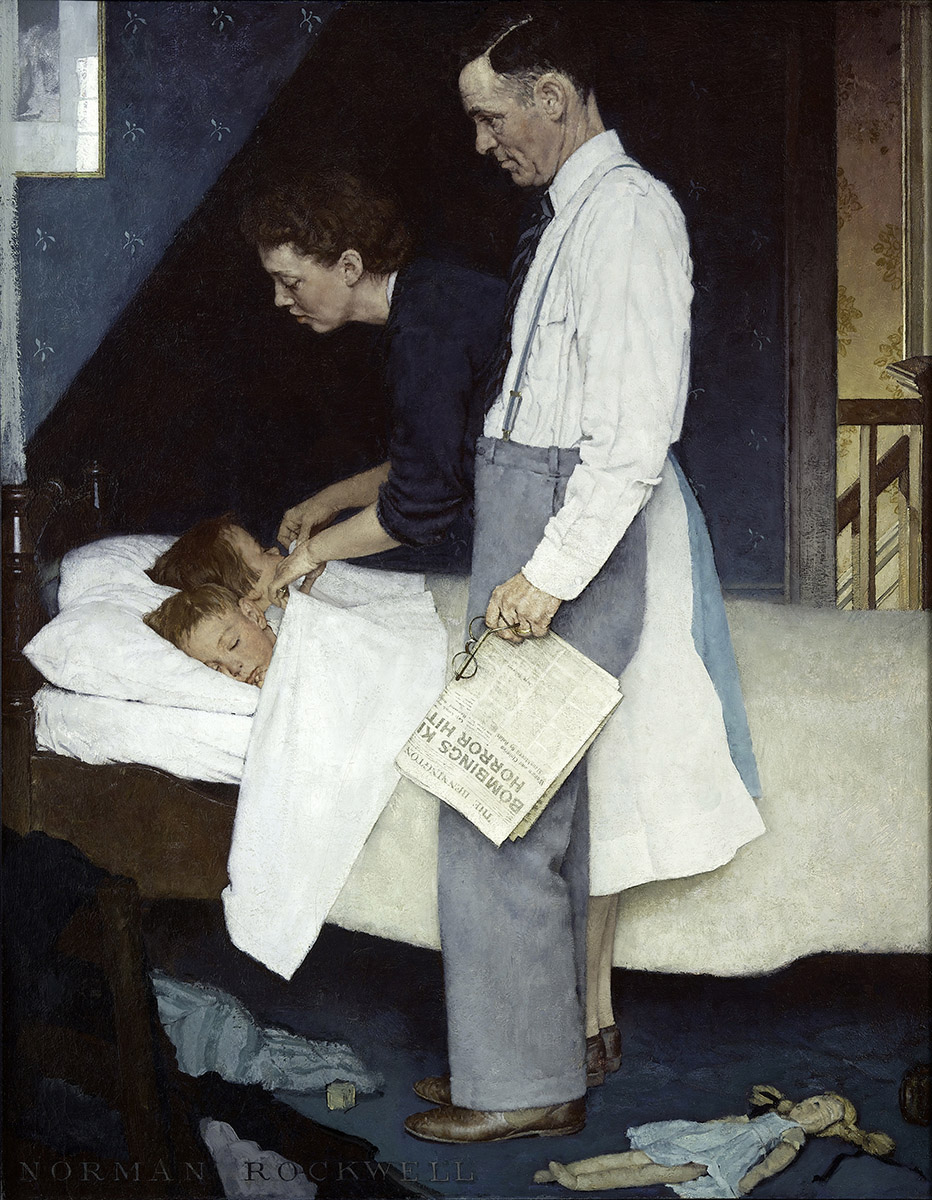
Freedom from Fear
Illustration for The Saturday Evening Post, March 13, 1943
Oil on canvas
By Norman Rockwell
Norman Rockwell Museum Collection
© 1943 SEPS – Curtis Publishing
Narrated By:
Stephanie Haboush Plunkett
Chief Curator – Norman Rockwell Museum
Freedom from Fear was painted while Europe was under siege, as revealed in the headline of the newspaper held in the father’s hand. Rockwell’s intention was to convey the notion that all parents should be able to put their children to bed each night with the assurance of their safety.
Here, a mother and father appear to check on their sleeping children as beautiful touches tell the story of a comfortable, middle-class life. Pictures, clothing, and toys are in the children’s bedroom, though the children do share a single bed. A warm light shines from the first floor of their home, implying that this family has attained some fiscal security and the American dream.
Although Rockwell did not view Freedom from Fear as particularly strong, the painting has remained relevant and has struck a chord in response to notable world events. After 9/11, The New York Times published Freedom from Fear on the front page of the paper, substituting Rockwell’s heading with language referencing the attacks in New York, Washington, D.C., and Pennsylvania.
In response to riots resulting from racial violence around the country, many artists have reinterpreted Freedom from Fear, as well as Rockwell’s iconic Problem We All Live With, to reflect those contemporary events and concerns.
Spanish
Freedom from Fear (Libertad del miedo)
Ilustración para The Saturday Evening Post, 13 de marzo de 1943
Óleo sobre lienzo
Por Norman Rockwell
Colección del Museo Norman Rockwell
© 1943 SEPS – Curtis Publishing
Narrado por:
Stephanie Haboush Plunkett
Directora Adjunta/Curadora Jefe – Museo Norman Rockwell
Freedom from Fear se pintó mientras Europa estaba sitiada, como se revela en la cabecera del periódico sostenido en la mano del padre. La intención de Rockwell era transmitir la idea de que todos los padres deberían poder acostar a sus hijos cada noche con la garantía de su seguridad.
Aquí, una madre y un padre parecen checar a sus hijos mientras duermen, ya que hermosos toques cuentan la historia de una vida cómoda y de clase media. Las imagenes, la ropa y los juguetes están en el dormitorio de los niños, aunque los niños comparten una cama individual. Una luz cálida brilla desde el primer piso de su hogar, lo que implica que esta familia ha logrado cierta seguridad fiscal y el sueño americano.
Aunque Rockwell no vio Freedom from Fear como particularmente fuerte, la pintura ha seguido siendo relevante y ha tocado la fibra sensible en respuesta a eventos mundiales notables. Después del 11 de septiembre, The New York Times publicó Freedom from Fear en la primera página del periódico, sustituyendo el encabezado de Rockwell por un lenguaje que hace referencia a los ataques en Nueva York, Washington, DC, y Pensilvania.
En respuesta a los disturbios resultantes de la violencia racial en todo el país, muchos artistas han reinterpretado Freedom from Fear, así como el icónico The Problem We All Live With (El problema con el que todos vivimos) de Rockwell, para reflejar esos eventos y preocupaciones contemporáneos.
French
Liberté de Vivre Sans Crainte
Illustration pour le Saturday Evening Post, 13 mars 1943
Huile sur toile
Par Norman Rockwell
Collection du Musée Norman Rockwell
© 1943 SEPS – Éditions Curtis
Raconté Par:
Stephanie Haboush Plunkett
Directeur Adjoint / Conservateur en Chef – Musée Norman Rockwell
Liberté de Vivre Sans Crainte a été peint pendant que l’Europe était assiégée, comme le révèle le titre du journal tenu dans la main du père. L’intention de Rockwell était de transmettre l’idée que tous les parents devraient être capables de mettre leurs enfants au lit chaque soir avec l’assurance de leur sécurité.
Ici, une mère et un père semblent vérifier sur leurs enfants endormis que de belles touches racontent l’histoire d’une vie confortable et bourgeoise. Des photos, des vêtements et des jouets sont dans la chambre des enfants, bien que les enfants partagent un lit simple. Une lumière chaude brille du premier étage de leur maison, ce qui implique que cette famille a atteint une certaine sécurité fiscale et le rêve Américain.
Bien que Rockwell n’ait pas considéré que Liberté de Vivre Sans Crainte était particulièrement forte, la peinture est restée pertinente et a trouvé un écho en réponse à des événements mondiaux remarquables. Après le 11 septembre, The New York Times a publié Liberté de Vivre Sans Crainte en première page du journal, en substituant le titre de Rockwell à un langage faisant référence aux attentats de New York, Washington, D.C. et Pennsylvanie.
En réponse aux émeutes résultant de la violence raciale dans le pays, de nombreux artistes ont réinterprété Liberté de Vivre Sans Crainte, ainsi que l’emblématique Problème que Nous Vivons Tous de Rockwell, pour refléter ces événements et préoccupations contemporains.
Liberté de Vivre Sans Crainte
German
Freedom from Fear (Freiheit von Furcht)
Illustration für The Saturday Evening Post, 13. März 1943
Öl auf Leinwand
Von Norman Rockwell
Norman Rockwell Museumssammlung
© 1943 SEPS – Curtis Publishing
Erzählt von:
Stephanie Haboush Plunkett
Stellvertretende Leiterin / Chefkuratorin – Norman Rockwell Museum
Freedom from Fear wurde gemalt, als Europa sich gerade im Belagerungszustand befand, wie aus der Schlagzeile der Zeitung hervorgeht, die der Vater in der Hand hält. Rockwells Intention war es, die Vorstellung zu vermitteln, dass alle Eltern in der Lage sein sollten, ihre Kinder jeden Abend im festen Vertrauen auf ihre Sicherheit zu Bett zu bringen.
Hier scheinen eine Mutter und ein Vater nach ihren schlafenden Kindern zu sehen, während liebevolle Berührungen die Geschichte eines behaglichen Mittelklasselebens erzählen. Obwohl die Kinder sich ein Bett teilen, befinden sich doch Bilder, Kleidungsstücke und Spielsachen in ihrem Schlafzimmer. Ein warmes Licht scheint aus dem Erdgeschoss ihres Zuhauses herauf, was darauf hindeutet, dass diese Familie ein gewisses Maß an finanzieller Sicherheit erreicht hat und der „amerikanische Traum“ für sie wahr geworden ist.
Obwohl Rockwell selbst Freedom from Fear nicht als besonders gewichtig ansah, ist das Gemälde relevant geblieben und hat vor dem Hintergrund eines denkwürdigen Weltgeschehens Anklang gefunden. Nach dem 11. September 2001 veröffentlichte die New York Times Freedom from Fear auf ihrer Titelseite und ersetzte Rockwells Titel durch Verweise auf die Angriffe in New York, Washington D. C. und Pennsylvania.
Als Reaktion auf die Unruhen, die aus der rassistisch motivierten Gewalt überall im Land hervorgingen, haben viele Künstler Freedom from Fear, ebenso wie Rockwells symbolträchtiges Gemälde Problem We All Live With (Das Problem, mit dem wir alle leben) neu interpretiert, um den Ereignissen und Anliegen der damaligen Zeit Rechnung zu tragen.
Japanese
Freedom from Fear
恐怖からの自由
Illustration for The Saturday Evening Post, March 13, 1943
1943年3月13日サタデイイブニングポストのイラスト
Oil on canvas
オイルキャンバス
By Norman Rockwell
ノーマン・ロックウェル作
Norman Rockwell Museum Collection
ノーマンロックウェルミュージアムコレクション
© 1943 SEPS – Curtis Publishing
©1943 SEPS -カーティス出版
Narrated By: Stephanie Haboush Plunkett
Deputy Director / Chief Curator – Norman Rockwell Museum
ステファニー・ハボース・プランケットによるナレーション付き:
副所長/チーフキュレーター – ノーマンロックウェル博物館
Freedom from Fear was painted while Europe was under siege, as revealed in the headline of the newspaper held in the father’s hand.
父親の手に握られた新聞の見出しに示されているように、ヨーロッパが包囲されているときに「恐怖からの自由」が描かれました。
Rockwell’s intention was to convey the notion that all parents should be able to put their children to bed each night with the assurance of their safety.
ロックウェルの意図は、すべての保護者が子供の安全を保証しながら毎晩寝ることができるようにという概念を伝えることでした。
Here, a mother and father appear to check on their sleeping children as beautiful touches tell the story of a comfortable, middle-class life.
ここでは、中産階級の快適な人生の物語を美しいタッチで伝えるように、母親と父親が、眠っている子供たちをチェックしているように見えます。
Pictures, clothing, and toys are in the children’s bedroom, though the children do share a single bed.
写真、衣服、おもちゃが子供たちのベッドルームにありますが、子供たちは1つのベッドに一緒に横になっています。
A warm light shines from the first floor of their home, implying that this family has attained some fiscal security and the American dream.
暖かい光が彼らの家の一階から輝き、この家族が経済的な安定とアメリカンドリームを達成したことを意味しています。
Although Rockwell did not view Freedom from Fear as particularly strong, the painting has remained relevant and has struck a chord in response to notable world events.
ロックウェルは「恐怖からの自由」を特に強く示しませんでしたが、この絵は重要な世界の出来事に対応して関連性を保ち続けています。
After 9/11, The New York Times published Freedom from Fear on the front page of the paper, substituting Rockwell’s heading with language referencing the attacks in New York, Washington, D.C., and Pennsylvania.
9月11日以降、ニューヨーク・タイムズ紙は新聞の第1面に「恐怖からの自由」を載せ、ニューヨーク、ワシントンDC、ペンシルバニア州での攻撃に関するロックウェルの言葉を引用して見出しを付けました。
In response to riots resulting from racial violence around the country, many artists have reinterpreted Freedom from Fear, as well as Rockwell’s iconic Problem We All Live With, to reflect those contemporary events and concerns.
国内の人種差別的暴力によって引き起こされた暴動に対応して、多くの芸術家は、現代の出来事や懸念を反映するために、「共有すべき問題」と同様にロックウェルを象徴する「恐怖からの自由」を再解釈しました。
Chinese
免于恐惧的自由
《星期六晚报》插画,1943年3月13日
布面油画
创作者/诺曼·洛克威尔
诺曼·洛克威尔博物馆收藏
© 1943 SEPS – Curtis Publishing
讲述人:
Stephanie Haboush Plunkett
副总监/总策展人 – 诺曼·洛克威尔博物馆
《免于恐惧的自由》创作时欧洲正处在围困之中,从画中父亲手中的报纸标题也可以发现这一点。洛克威尔希望传递的是这样一种观念,即所有父母都应该能够在保证孩子安全的情况下每晚带孩子入睡。
在这里,父亲和母亲仿佛在凝视着他们睡着的孩子,美丽的笔触讲述了一个温馨的中产家庭生活。孩子房中堆着画册、衣服和玩具,尽管孩子们都挤在单人床上。从一楼散发出柔和灯光,说明这个家庭已经实现一些财政安全和美国梦。
尽管洛克威尔并不十分重视《免于恐惧的自由》这幅作品,但这幅画依然非常有意义,并在重大世界事件时引发了许多共鸣。911事件发生后,《纽约时报》将《免于恐惧的自由》登在报纸首页,并用一些谈及纽约、华盛顿和宾夕法尼亚的袭击事件的措辞取代洛克威尔的原标题。
面对全国各地的种族暴力导致的骚乱,许多艺术家重新解读《免于恐惧的自由》和洛克威尔经典之作《我们共视的难题》以反映当代的时事和问题。
Arabic
التحرر من الخوف
صورة لجريدة “ساترداي إيفنينغ بوست”، 13 آذار مارس 1943
رسم زيتي على القماش
لـ نورمان روكويل
مجموعة متحف نورمان روكويل
© 1943 SEPS – كورتيس للنشر
الراوي:
ستيفاني هابوش بلونكيت
نائب مدير / رئيسة أمناء المتحف – متحف نورمان روكويل
تمّ رسم “التحرر من الخوف” في الوقت الذي كانت فيه أوروبا تحت الحصار، وهو ما كشف عنه عنوان الجريدة التي يمسك بها الأب في يده. كانت نيّة روكويل هي نقل فكرة أنّه يجدر بجميع الآباء أن يكونوا قادرين على وضع أبنائهم في السرير كلّ ليلة مع ضمان سلامتهم.
هنا يظهر الأب والأمّ وهما يتفحصان طفليهما النائمين، فيما تكشف اللمسات الجميلة عن قصّة حياة مريحة لعائلة من طبقة متوسّطة. توجد صور وملابس وألعاب في غرفة نوم الطفلين بينما يتشاركان سريرا واحدا. يصدر ضوء دافئ من الطابق الأوّل لمنزلهم، وهو ما يشير إلى أنّ هذه العائلة قد حققت بعض الاكتفاء المالي والحلم الأمريكي.
على الرغم من أنّ روكويل لم يكن يعتبر “التحرر من الخوف” صورة قوية بالخصوص، إلّا أنها بقيت ذات صلة واستُشهد بها جوابا على العديد من الأحداث العالمية البارزة. بعد أحداث الحادي عشر من سبتمبر، نشرت صحيفة “نيويورك تايمز” صورة “التحرر من الخوف” على صفحتها الرئيسة مع استبدال ترويسة روكويل بعبارة تحيل إلى الهجمات في نيويورك والعاصمة واشنطن وبنسلفانيا.
كجواب على أعمال الشغب الناجمة عن العنف العرقي في أرجاء البلاد، أعاد الكثير من الفنانين تأويل “التحرر من الخوف”، إلى جانب الرسم الشهير “المشاكل التي نعيش معها جميعا” تعبيرا عن تلك الأحداث والانشغالات المعاصرة.