
English
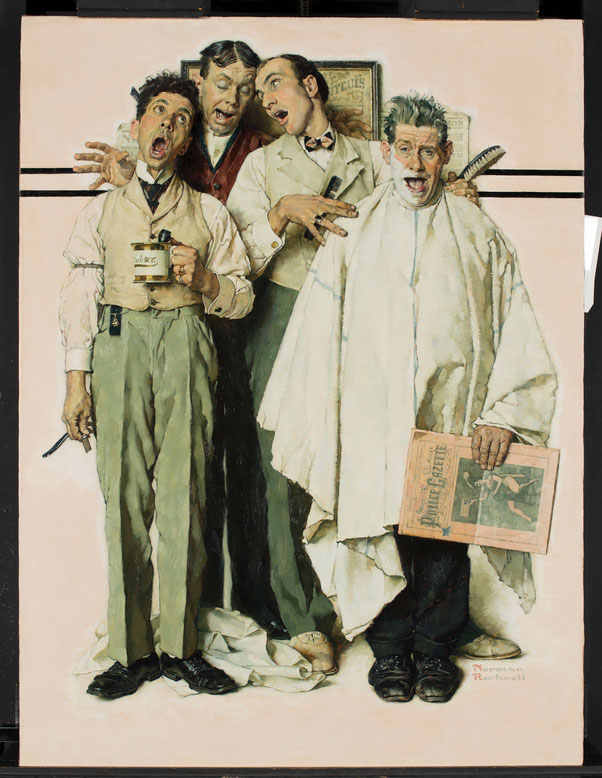
Cover illustration for The Saturday Evening Post, September 26, 1936
Oil on Canvas
By Norman Rockwell
Private Collection
© 1936 SEPS – Curtis Publishing
Narrated By:
Stephanie Haboush Plunkett
Chief Curator – Norman Rockwell Museum
This section of the exhibition looks at life’s small pleasures, which were especially popular subjects in American magazines during the Great Depression, when many people really did not have the means to spend a lot of money for entertainment. What we’re seeing here in the wonderful 1936 cover illustration for the Saturday Evening Post are a group of men who have gathered in a barbershop and are just having a wonderful time singing together. The concept of the barbershop quartet and amateur singing in general really became popular in the 1890’s and continued right up through the Depression. Here, Rockwell, really gets to show off the thing that he so enjoyed about people, animated facial expressions, lots of wonderful idiosyncrasies in his characters, and even hand gestures that connect each of the figures to each other.
It’s a great scene that actually includes another important illustrator, who also illustrated for the Post and other magazines. Walter Beach Humphrey is seen on the right hand side, his face half-shaved, half-covered with shaving cream. He holds a publication called the Police Gazette, which we might imagine to tell us about the activities of the American policemen, but instead was actually a gentleman’s magazine that had stories about the darker side of life.
When Rockwell did this piece in 1936, he was living in New Rochelle, New York, which, at the time, had the highest per capita number of illustrators of any city in the entire nation. New Rochelle had the advantage of being 45 minutes from Broadway, and so artists could enjoy a more bucolic rural existence, though New Rochelle certainly had its share of activity. It was a short train ride from New York City, so illustrators living there could actually deliver their work very easily to their publishers.
Spanish
Cuarteto de barbería
Ilustración de portada para The Saturday Evening Post, 26 de septiembre de 1936
Óleo sobre lienzo
Por Norman Rockwell
Colección privada
© 1936 SEPS – Curtis Publishing
Narrado por:
Stephanie Haboush Plunkett
Directora Adjunta/Curadora Jefe – Museo Norman Rockwell
Esta sección de la exposición analiza los pequeños placeres de la vida, que fueron temas especialmente populares en las revistas estadounidenses durante la Gran Depresión, cuando muchas personas realmente no tenían los medios para gastar mucho dinero en entretenimiento. Lo que estamos viendo aquí en la maravillosa ilustración de la portada de 1936 del Saturday Evening Post es un grupo de hombres que se han reunido en una barbería y que lo están pasando maravillosamente cantando juntos. El concepto del cuarteto de barbería y el canto aficionado en general se popularizó en la década de 1890 y continuó hasta la Depresión. Aquí, Rockwell, realmente muestra lo que tanto le gustaba de la gente, las expresiones faciales animadas, muchas idiosincrasias maravillosas en sus personajes e incluso gestos con las manos que conectan a cada una de las figuras entre sí.
Es una gran escena que en realidad incluye otro ilustrador importante, que también ilustró para el Post y otras revistas. Walter Beach Humphrey es visto en el lado derecho, su cara medio afeitada, medio cubierta con crema de afeitar. Tiene una publicación llamada Police Gazette, que podríamos imaginar que nos contaría sobre las actividades de los policías estadounidenses, pero en realidad era una revista para caballeros que tenía historias sobre el lado oscuro de la vida.
Cuando Rockwell hizo esta pieza en 1936, vivía en New Rochelle, Nueva York, que, en ese momento, tenía el número más alto de ilustradores per capita de cualquier ciudad en toda la nación. New Rochelle tenía la ventaja de estar a 45 minutos de Broadway, por lo que los artistas podían disfrutar de una existencia rural más bucólica, aunque New Rochelle ciertamente tenía su parte de actividad. Fue un corto viaje en tren desde la ciudad de Nueva York, por lo que los ilustradores que viven allí realmente podrían entregar su trabajo muy fácilmente a sus editores.
French
Quatuor de Garçons Coiffeurs
Illustration de couverture pour The Saturday Evening Post, 26 septembre 1936
Huile sur Toile
Par Norman Rockwell
Collection Privée
© 1936 SEPS – Éditions Curtis
Raconté Par :
Stephanie Haboush Plunkett
Directeur Adjoint / Conservateur en Chef – Musée Norman Rockwell
Cette section de l’exposition se penche sur les petits plaisirs de la vie, sujets particulièrement populaires dans les magazines américains pendant la Grande Dépression, où beaucoup de gens n’avaient pas les moyens de dépenser beaucoup d’argent pour se divertir. Ce que nous voyons ici, dans la magnifique illustration de couverture de 1936 pour le Saturday Evening Post, est un groupe d’hommes qui se sont réunis dans un salon de coiffure et qui s’amusent en chantant ensemble. Le concept du Quatuor Garçons Coiffeurs et du chant amateur devint en général très populaire dans les années 1890 et continua tout au long de la dépression. Ici, Rockwell montre vraiment ce qu’il aime tant des gens, des expressions faciales animées, beaucoup d’idiosyncrasies merveilleuses dans ses personnages, et même des gestes de mains qui relient chacune des figures entre elles.
C’est une superbe scène qui comprend en fait un autre illustrateur important, qui a également illustré pour le Post et d’autres magazines. Walter Beach Humphrey se trouve sur le côté droit, le visage demi-rasé, à moitié recouvert de crème à raser. Il tient une publication appelée Police Gazette, que nous pourrions imaginer nous parle des activités des policiers américains, mais qui était en fait un magazine dédié aux hommes qui publiait des histoires sur le côté sombre de la vie.
Quand Rockwell a créé cette pièce en 1936, il vivait à New Rochelle, New York, qui, à l’époque, avait le plus grand nombre d’illustrateurs par habitant de n’importe quelle ville de la nation. New Rochelle avait l’avantage d’être à 45 minutes de Broadway, et ainsi les artistes pouvaient profiter d’une existence rurale plus bucolique, bien que New Rochelle ait certainement eu sa part d’activité. C’était un court trajet en train de New York City, donc les illustrateurs qui vivent là pouvaient réellement livrer leur travail très facilement à leurs éditeurs.
German
Barbershop Quartet („Frisörladen“-Quartett)
Titelblatt-Illustration für The Saturday Evening Post, 26. September 1936
Öl auf Leinwand
Von Norman Rockwell
Privatsammlung
© 1936 SEPS – Curtis Publishing
Erzählt von:
Stephanie Haboush Plunkett
Stellvertretende Leiterin / Chefkuratorin – Norman Rockwell Museum
Dieser Teil der Ausstellung widmet sich den kleinen Freuden des Lebens – ein besonders beliebtes Thema in den amerikanischen Zeitschriften während der Weltwirtschaftskrise, als viele Menschen es sich einfach nicht leisten konnten, viel Geld für Unterhaltung auszugeben. Was wir hier auf dieser wunderbaren Titelblatt-Illustration für die Saturday Evening Post aus dem Jahr 1936 sehen, ist eine Gruppe von Männern, die sich in einem Frisörladen zusammengefunden haben und sich dabei vergnügen, gemeinsam zu singen. Richtig populär wurde das Konzept des Barbershop-Quartetts und allgemein des Amateurgesangs in den 1890er-Jahren und blieb es während der gesamten Wirtschaftskrise. Hier konnte Rockwell das, was ihm an Menschen so gefiel, ausgiebig zur Geltung bringen – Gesichtsausdrücke voller Leben, die vielen interessanten Eigenarten seiner Charaktere und sogar Handbewegungen, mit denen er eine Verbindung zwischen den einzelnen Figuren schafft.
Es ist eine großartige Szene, die sogar einen anderen bedeutenden Illustrator mit einschließt, der ebenfalls für die Post und andere Zeitschriften arbeitete. Walter Beach Humphrey ist auf der rechten Seite zu sehen, das Gesicht zur Hälfte rasiert und zur Hälfte mit Rasiercreme bedeckt. Er hält eine Zeitschrift namens Police Gazette in der Hand, von der man eigentlich annehmen könnte, dass sie Informationen über die Aktivitäten der amerikanischen Polizisten enthielt, die in Wirklichkeit aber ein Männermagazin mit Geschichten der etwas dunkleren Sorte war.
Als Rockwell dieses Werk im Jahr 1936 anfertigte, lebte er in New Rochelle (New York), der Stadt mit der damals landesweit größten Anzahl an Illustratoren pro Einwohner. New Rochelle besaß den Vorteil, 45 Minuten vom Broadway entfernt zu sein, und so konnten die Künstler ein etwas beschaulicheres, ländliches Leben genießen, obwohl man auch in New Rochelle durchaus einiges unternehmen konnte. Da die Zugfahrt von New York City nicht lang war, konnten die Illustratoren, die dort wohnten, ihre Werke ohne großen Aufwand bei ihren Verlagen abliefern.
Japanese
Barbershop Quartet
理髪店カルテット
Cover illustration for The Saturday Evening Post, September 26, 1936
1936年9月26日土曜日のイブニングポストの表紙イラスト
Oil on Canvas
オイルキャンバス
By Norman Rockwell
ノーマン・ロックウェル
Private Collection
プライベートコレクション
© 1936 SEPS – Curtis Publishing
©1936 SEPS -カーティス出版
Narrated By:
ナレーション付き
Stephanie Haboush Plunkett
ステファニー・ハボース・プランケット
Deputy Director / Chief Curator – Norman Rockwell Museum
副所長/チーフキュレーター – ノーマンロックウェル博物館
This section of the exhibition looks at life’s small pleasures, which were especially popular subjects in American magazines during the Great Depression, when many people really did not have the means to spend a lot of money for entertainment.
展覧会のこのセクションでは、多くの人がエンターテインメントのために多くのお金を費やす手段を持っていなかった大恐慌時のアメリカ雑誌で特に人気だった生活の小さな楽しみを見せています。
What we’re seeing here in the wonderful 1936 cover illustration for the Saturday Evening Post are a group of men who have gathered in a barbershop and are just having a wonderful time singing together.
私たちがここに見ているのは、1936年のサタデーイブニングポスト紙用の素晴らしいカバー・イラストで、理髪店に集まって一緒に歌を歌って楽しい時間を過ごしている男性のグループです。
The concept of the barbershop quartet and amateur singing in general really became popular in the 1890’s and continued right up through the Depression.
理髪店カルテットとアマチュア歌唱のコンセプトは、不景気の中1890年代に人気を博しました。
Here, Rockwell, really gets to show off the thing that he so enjoyed about people, animated facial expressions, lots of wonderful idiosyncrasies in his characters, and even hand gestures that connect each of the figures to each other.
ここでは、ロックウェルは、本当に人々が楽しんでいたこと、アニメーションの表情、素敵な素質のキャラクター、さらにはそれぞれの人物をつなぐ手のジェスチャーを披露しています。
It’s a great scene that actually includes another important illustrator, who also illustrated for the Post and other magazines.
ポスト紙や他の雑誌のイラストレーターとしても活躍している素晴らしいイラストレーターです。
Walter Beach Humphrey is seen on the right hand side, his face half-shaved, half-covered with shaving cream.
ウォルター・ビーチハンフリーは右側に見え、彼の顔の半分は剃られ、半分はシェービングクリームで覆われています。
He holds a publication called the Police Gazette, which we might imagine to tell us about the activities of the American policemen, but instead was actually a gentleman’s magazine that had stories about the darker side of life.
彼は、「警察官報」という出版物を持っていて、アメリカの警察官の活動について私たちに伝えるような雑誌をイメージするかもしれませんが、実際には、人生の暗い一面に関する物語を扱った紳士誌でした。
When Rockwell did this piece in 1936, he was living in New Rochelle, New York, which, at the time, had the highest per capita number of illustrators of any city in the entire nation.
ロックウェルが1936年にこの作品を作ったとき、彼はニューヨークのニューロシェルに住んでいましたが、その当時は、全国のどの都市も一人当たりのイラストレーターの人数が一番多い頃でした。
New Rochelle had the advantage of being 45 minutes from Broadway, and so artists could enjoy a more bucolic rural existence, though New Rochelle certainly had its share of activity.
ニューロシェルはブロードウェイから45分という長所があったので、活動のシェアもありましたが、芸術家たちは田舎の農村の存在も楽しむことができました。
It was a short train ride from New York City, so illustrators living there could actually deliver their work very easily to their publishers.
それはニューヨーク市から電車ですぐだったので、そこに住んでいるイラストレーターは実際に彼らの作品を出版社に簡単に届けることができました。
Chinese
理发店四重唱
《星期六晚报》封面插图,1936年9月26日
布面油画
创作者/诺曼·洛克威尔
私人收藏
© 1936 SEPS – Curtis Publishing
讲述人:
Stephanie Haboush Plunkett
副总监/总策展人 – 诺曼·洛克威尔博物馆
展览的这一板块更多关注生活中的小乐趣,这也是大萧条时期美国杂志非常受欢迎的主题,因为当时许多人都无法花大量的钱来进行娱乐活动。我们在1936年《星期六晚报》这幅封面插图中可以看到,一群人聚在理发店里一起唱歌,共度欢乐时光。理发店四重唱和大众唱歌娱乐的概念在19世纪90年代非常受欢迎,并一直持续到大萧条时期。在画中,洛克威尔真正开始展现他对人物形象的喜爱、生动的面部表情、画中人物的许多美好特质以及与每个人物相关联的手势。
场景非常美好,还有另一位曾为《星期六晚报》及其它杂志社供稿的重要插画家。右手边的这位是沃尔特·比奇·汉弗莱(Walter Beach Humphrey),他脸上的胡子一半被剃光,另一半抹着剃须膏。他的手上还拿着一本名叫《警务报》的刊物,我们大概会以为这是一本讲述美国警察活动的刊物,但它实际上是一本讲述生活阴暗面故事的绅士杂志。
1936年洛克威尔创作这幅插画时住在纽约州的新罗谢尔,当时那里是全国插画师最多的城市。新罗谢尔距离百老汇仅45分钟路程,因此艺术家可以享受田园气息更加浓郁的乡村生活,尽管在新罗谢尔与艺术相关的活动也不少。搭乘短途火车即可到达纽约市,因此住在那里的插画师们可以轻松把自己的作品送到出版商手上。
Arabic
رباعيّ محلّ الحلاقة
صورة غلاف لجريدة “ساترداي إيفنينغ بوست”، 26 سبتمبر 1936
رسم زيتي على القماش
لـ نورمان روكويل
مجموعة خاصّة
© 1943 SEPS – كورتيس للنشر
الراوي:
ستيفاني هابوش بلونكيت
نائب مدير / رئيسة أمناء المتحف – متحف نورمان روكويل
هذا القسم من المعرض يتناول متع الحياة الصغيرة التي كانت مواضيع رائجة بالخصوص في المجلات الأمريكية أثناء فترة الكساد الكبير، أين لم يكن في حوزة الكثير من الناس الوسائل اللازمة لإنفاق الكثير من المال على الترفيه. الذي نراه هنا في رسم غلاف جريدة “ساترداي إيفنينغ بوست” سنة 1936 هو مجموعة من الرجال الذين اجتمعوا في محلّ للحلاقة وهم يقضون وقتا ممتعا في الغناء سوية. أصبحت فكرة رباعيّ محلّ الحلاقة وغناء الهواة عموما رائجة جدّا في تسعينيات القرن التاسع عشر واستمرت أثناء فترة الكساد. هنا، يتسنّى لروكويل ابراز أكثر الأشياء التي يستمتع بها بشأن الناس: تعبيرات الوجه المتحركة إلى جانب الكثير من الخصوصيات الرائعة في شخصياته، وحتى حركات اليد التي تربط الشخصيات ببعضها.
أنه مشهد رائع يتضمّن رساما مهما آخرا في الحقيقة، وقد كان يرسم لجريد الـ “بوست” ومجلات أخرى. يُمكن رؤية “والتر بيتش هامفري” على الجانب الأيمن، وجهه نصف حليق والنصف الآخر مغطى بكريمة الحلاقة. يمسك بمنشور معنون بـ “بوليس غازيتي”، والذي قد نظنّ أنه يخبرنا بنشاطات الشرطة الأمريكية، لكنها في الحقيقة مجلّة خاصة بالرجال النبلاء وتحتوي على قصص تتناول الجانب المظلم للحياة.
عندما أنجز روكويل هذا الرسم سنة 1936، كان يعيش في نيو روشيل بنيويورك، والتي كان بها في ذلك الوقت أكبر عدد من الرسامين بالنسبة للفرد الواحد في البلد بأكمله. كانت نيو روشيل تتميز بأنها تبعد مسافة 45 دقيقة فقط عن برودواي، لهذا كان في وسع الفنانين التمتع بالمزيد من الوجود الريفي، على الرغم من أنّ نيو روشيل كانت لها حصتها من الحركة أيضا. كانت رحلة قصيرة بالقطار كفيلة بربطهم بنيويورك، وعليه كان بمقدور الرسامين الذين يعيشون هناك تقديم أعمالهم لناشريهم بكل سهولة.