
English
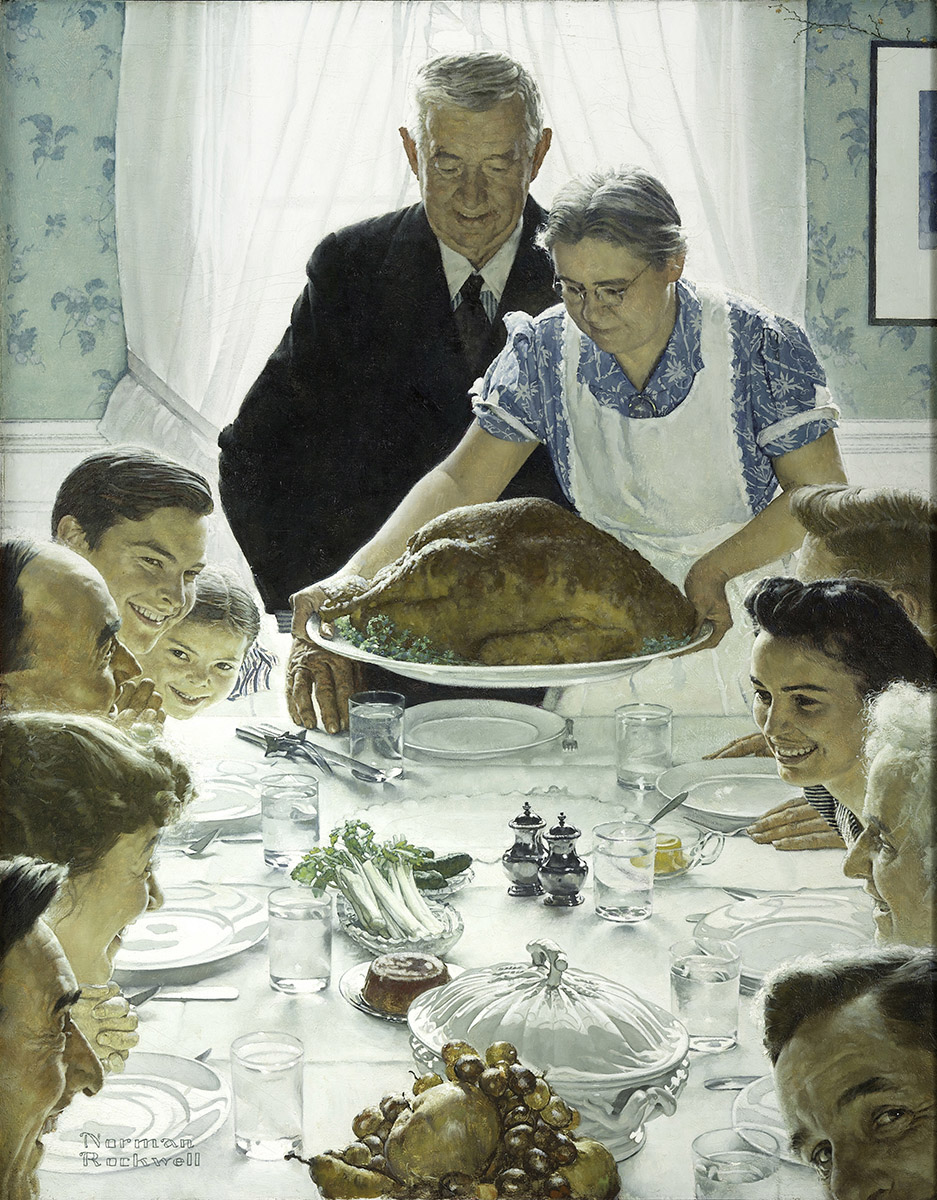
Freedom from Want
Illustration for The Saturday Evening Post, March 6, 1943
Oil on canvas
By Norman Rockwell
Norman Rockwell Museum Collection
© 1943 SEPS – Curtis Publishing
Narrated By:
Stephanie Haboush Plunkett
Chief Curator – Norman Rockwell Museum
Freedom from Want was not as great a conceptual challenge as Rockwell’s other two previous Four Freedoms paintings (Speech and Worship). The piece was inspired by, and has since become a model for the All-American Thanksgiving.
Though created as a composite with Rockwell’s models posing for him in his studio at individual sessions, this family scene includes some of the artist’s own neighbors and family members. Featured is Mrs. Thaddeus Wheaton, the family’s cook, who supports a large holiday turkey, as well as Mary Barstow Rockwell, the artist’s wife, and his mother Nancy Hill Rockwell who is seen on the right.
Freedom from Want was published with an essay by the relatively unknown novelist and poet Carlos Bulosan, a Filipino immigrant to America, and a migrant worker who wrote on behalf of those enduring domestic hardship. A counterpoint to the gentle representations in Rockwell’s paintings, Bulosan’s essay looked forward to a possible future in which those outside the social mainstream, migrant farm workers, union organizers, laborers, African-American victims of segregation, Asian, and Latino immigrants, might be allowed to experience true freedom.
Artistically, the work is highly regarded as an example of the mastery of the challenges of portraying visual texture in art, including the gleam of white china on white tablecloth, and the transparency of water in glasses.
Despite Rockwell’s general optimism, he had misgivings of having depicted such a large turkey when much of Europe was starving, overrun, and displaced as World War II raged. Many critics acknowledge the over abundance of food depicted in this image, but also noted that the image displays family, conviviality, and security, and were of the opinion that abundance rather than mere sufficiency was the truest answer to the notion of want.
Spanish
Freedom from Want (Libertad de querer)
Ilustración para The Saturday Evening Post, 6 de marzo de 1943
Óleo sobre lienzo
Por Norman Rockwell
Colección del Museo Norman Rockwell
© 1943 SEPS – Curtis Publishing
Narrado por:
Stephanie Haboush Plunkett
Directora Adjunta/Curadora Jefe – Museo Norman Rockwell
Freedom from Want no fue un reto conceptual tan grande como las otras dos pinturas previas de Four Freedoms (Speech [Expresión] y Worship [Cultos]) de Rockwell. La pieza fue inspirada en ello, y desde entonces se ha convertido en un modelo para el Día de Acción de Gracias de todos los Estados Unidos.
Aunque se creó como un compuesto con los modelos de Rockwell posando para él en su estudio en sesiones individuales, esta escena familiar incluye algunos de los vecinos y miembros de la familia del artista. Se veian la Sra. Thaddeus Wheaton, la cocinera de la familia, que apoya a un gran pavo de día festivo, y Mary Barstow Rockwell, la esposa del artista, y su madre, Nancy Hill Rockwell, a quien se ve a la derecha.
Freedom from Want fue publicado con un ensayo del novelista y poeta relativamente desconocido Carlos Bulosan, un inmigrante filipino en los Estados Unidos, y un trabajador migrante que escribió en nombre de aquellos que sufren privaciones domésticas. Un contrapunto a las representaciones suaves en las pinturas de Rockwell, el ensayo de Bulosan esperaba un posible futuro en el que aquellos fuera de la corriente social, trabajadores agrícolas migrantes, organizadores sindicales, trabajadores, víctimas afroamericanas de la segregación, inmigrantes asiáticos y latinos, podrían ser permitido experimentar la verdadera libertad.
Artísticamente, el trabajo es considerado como un ejemplo del dominio de los desafíos de retratar la textura visual en el arte, incluido el brillo de la porcelana blanca sobre el mantel blanco y la transparencia del agua en los vasos.
A pesar del optimismo general de Rockwell, tenía dudas sobre haber representado a un pavo tan grande cuando gran parte de Europa estaba muriendo de hambre, invadida y desplazada a medida que se desencadenaba la Segunda Guerra Mundial. Muchos críticos reconocen la abundancia de comida representada en esta imagen, pero también notaron que la imagen muestra familia, cordialidad y seguridad, y opinaban que la abundancia más que la mera suficiencia era la respuesta más verdadera a la noción de necesidad.
French
Liberté (de vivre) à l’Abri du Besoin
Illustration pour le Saturday Evening Post, 6 mars 1943
Huile sur toile
Par Norman Rockwell
Collection du Musée Norman Rockwell
© 1943 SEPS – Éditions Curtis
Raconté par:
Stephanie Haboush Plunkett
Directeur Adjoint / Conservateur en Chef – Musée Norman Rockwell
Liberté (de vivre) à l’Abri du Besoin n’était pas un défi conceptuel aussi important que les deux autres peintures précédentes de Rockwell (Expression et Culte). La pièce a été inspirée par, et est depuis devenue un modèle du All-American Thanksgiving.
Bien que créé en tant que composite avec les modèles de Rockwell posant pour lui dans son studio lors de séances individuelles, cette scène de famille comprend certains des propres voisins et des membres de la famille de l’artiste. En vedette est Mme Thaddeus Wheaton, la cuisinière de la famille, qui tient une grande dinde de fête, ainsi que Mary Barstow Rockwell, la femme de l’artiste, et sa mère Nancy Hill Rockwell qui sont sur la droite.
Liberté (de vivre) à l’Abri du Besoin a été publié avec un essai du romancier et poète Carlos Bulosan, un philippin relativement peu connu, un immigrant philippin en Amérique, et un travailleur migrant qui a écrit au nom de ces difficultés intérieures persistantes. Contrepoint aux représentations douces des peintures de Rockwell, l’essai de Bulosan envisageait un futur possible dans lequel les personnes extérieures au courant social, les travailleurs agricoles migrants, les syndicalistes, les travailleurs, les victimes afro-américaines de la ségrégation, les immigrants asiatiques et latinos, pourrait être autorisé à expérimenter la vraie liberté.
Sur le plan artistique, l’œuvre est considérée comme un exemple de la maîtrise des défis liés à la représentation de la texture visuelle dans l’art, y compris la lueur de la porcelaine blanche sur la nappe blanche et la transparence de l’eau dans les verres.
En dépit de l’optimisme général de Rockwell, il avait des doutes d’avoir représenté une dinde si grande quand une grande partie de l’Europe était affamée, envahie et déplacée pendant que la Seconde Guerre mondiale faisait rage. Beaucoup de critiques reconnaissent la surabondance de nourriture illustrée dans cette image, mais ont également noté que l’image montre la famille, la convivialité et la sécurité, et étaient d’avis que l’abondance plutôt que la simple suffisance était la réponse la plus véritable à la notion de besoin.
German
Freedom from Want (Freiheit von Not)
Illustration für The Saturday Evening Post, 6. März 1943
Öl auf Leinwand
Von Norman Rockwell
Norman Rockwell Museumssammlung
© 1943 SEPS – Curtis Publishing
Erzählt von:
Stephanie Haboush Plunkett
Stellvertretende Leiterin / Chefkuratorin – Norman Rockwell Museum
Freedom from Want war keine so große konzeptionelle Herausforderung wie die beiden vorausgehenden Gemälde aus Rockwells Four Freedoms-Reihe (Speech und Worship – Rede und Glauben). Das Werk war vom typisch amerikanischen Thanksgiving inspiriert und hat sich seitdem zu einer Vorlage dafür entwickelt.
Obwohl diese Familienszene als Kompositum entstanden ist, für das Rockwells Modelle in separaten Sitzungen in seinem Atelier posierten, sind darauf einige Nachbarn und Familienmitglieder des Künstlers zu sehen. Mit dabei sind Mrs. Thaddeus Wheaton, die Köchin der Familie, wie sie einen großen Festtagstruthahn aufträgt, Mary Barstow Rockwell, die Gattin des Künstlers, und seine Mutter Nancy Hill Rockwell, die auf der rechten Seite zu sehen ist.
Freedom from Want wurde zusammen mit einem Essay des relativ unbekannten Autoren und Dichters Carlos Bulosan veröffentlicht, einem philippinischen Einwanderer und Wanderarbeiter, der im Namen derer schrieb, die zu Hause Entbehrungen erleiden mussten. Als Kontrapunkt zu den sanften Darstellungen auf Rockwells Gemälden blickte Bulosans Essay einer möglichen Zukunft entgegen, in der jene außerhalb des gesellschaftlichen Mittelfelds, Wanderlandarbeiter, Gewerkschaftsorganisatoren, Hilfsarbeiter, afroamerikanische Opfer der Rassentrennung sowie asiatische und lateinamerikanische Einwanderer vielleicht die Möglichkeit erhalten würden, echte Freiheit zu erleben.
Aus künstlerischer Sicht ist das Werk ein hoch angesehenes Beispiel für die meisterhafte Darstellung visueller Texturen, wie etwa dem Schimmer weißen Porzellans auf weißem Tischtuch oder der Transparenz von Wasser in Gläsern.
Rockwells allgemeinem Optimismus zum Trotz regten sich in ihm Bedenken, weil er in einer Zeit, in der der Zweite Weltkrieg wütete und ein Großteil Europas hungerte, überrollt und vertrieben wurde, einen so großen Truthahn gemalt hatte. Viele Kritiker bestätigten die übertriebene Fülle an Speisen auf diesem Bild, wiesen aber auch darauf hin, dass darauf Familie, Geselligkeit und Sicherheit zur Schau gestellt werden, und waren der Meinung, dass Fülle, und nicht eine gerade nur ausreichende Menge, die wirkungsvollste Antwort auf die Vorstellung von Not sei.
Japanese
Freedom from Want
欠乏からの自由
Illustration for The Saturday Evening Post, March 6, 1943
1943年3月6日サタデイイブニングポストのイラスト
Oil on canvas
オイルキャンバス
By Norman Rockwell
ノーマン・ロックウェル作
Norman Rockwell Museum Collection
ノーマンロックウェルミュージアムコレクション
© 1943 SEPS – Curtis Publishing
©1943 SEPS -カーティス出版
Narrated By: Stephanie Haboush Plunkett
Deputy Director / Chief Curator – Norman Rockwell Museum
ステファニー・ハボース・プランケットによるナレーション付き:
副所長/チーフキュレーター – ノーマンロックウェル博物館
Freedom from Want was not as great a conceptual challenge as Rockwell’s other two previous Four Freedoms paintings (Speech and Worship).
「欠乏からの自由」は、ロックウェルの「4つの自由」の他の2つの絵画(言論と崇拝)と同じほど概念的な挑戦ではありませんでした。
The piece was inspired by, and has since become a model for the All-American Thanksgiving.
この作品はインスピレーションを受けて以来、全米の感謝祭の模範となっています。
Though created as a composite with Rockwell’s models posing for him in his studio at individual sessions, this family scene includes some of the artist’s own neighbors and family members.
個々のセッションで彼のスタジオで彼のためにポーズを取るロックウェルのモデルとのコンポジットとして作成されていますが、この家族のシーンにはアーティストの隣人や家族の一部が含まれています。
Featured is Mrs. Thaddeus Wheaton, the family’s cook, who supports a large holiday turkey, as well as Mary Barstow Rockwell, the artist’s wife, and his mother Nancy Hill Rockwell who is seen on the right.
注目されているのは、大きなホリデイターキー(七面鳥)を支えている家族の料理人であるタデウスウィートン夫人と、アーティストの妻であるメアリー・バーストウ・ロックウェルと、右側に見られる母親のナンシー・ヒル・ロックウェルです。
Freedom from Want was published with an essay by the relatively unknown novelist and poet Carlos Bulosan, a Filipino immigrant to America, and a migrant worker who wrote on behalf of those enduring domestic hardship.
「欠乏からの自由」は、比較的知られていない小説家であり詩人のカルロス・ブローサン(フィリピン系米国移民)と、国内の苦難を耐え忍ぶ人々のために書いた移民労働者によるエッセイで出版されました。
A counterpoint to the gentle representations in Rockwell’s paintings, Bulosan’s essay looked forward to a possible future in which those outside the social mainstream, migrant farm workers, union organizers, laborers, African-American victims of segregation, Asian, and Latino immigrants, might be allowed to experience true freedom.
ロックウェルの絵の穏やかな表現とは対照的に、ブローサンのエッセーは、社会の主流から離れた、移民農家労働者、労働組合主催者、労働者、アフリカ系アメリカ人の分離犠牲者、アジア人、ラテン系移民の真の自由を感じ取ることができました。
Artistically, the work is highly regarded as an example of the mastery of the challenges of portraying visual texture in art, including the gleam of white china on white tablecloth, and the transparency of water in glasses.
芸術的には、この作品は、白いテーブルクロスの上で白い陶磁器が輝いていることや、グラスの中の水の透明性が描かれていることなど、芸術における視覚的な質感を描くという課題を見事にクリアした例として高く評価されています。
Despite Rockwell’s general optimism, he had misgivings of having depicted such a large turkey when much of Europe was starving, overrun, and displaced as World War II raged.
ロックウェルは一般的には楽観主義ですが、その彼でも第二次世界大戦が勃発したときには、ヨーロッパの多くの国が飢えに苦しみ、限界に達し、避難しているときに、このような大きな七面鳥を描いたことに対する不安を抱いていました。
Many critics acknowledge the over abundance of food depicted in this image, but also noted that the image displays family, conviviality, and security, and were of the opinion that abundance rather than mere sufficiency was the truest answer to the notion of want.
多くの批評家は、この画像に描かれている食べ物が単に豊富だというだけでなく、家族、陽気さ、安全性を示すイメージがあり、単に十分というよりも豊富であることが、欠乏の概念に対する真の答えだと考えています。
Chinese
免于匮乏的自由
《星期六晚报》插画,1943年3月6日
布面油画
创作者/诺曼·洛克威尔
诺曼·洛克威尔博物馆收藏
© 1943 SEPS – Curtis Publishing
讲述人:
Stephanie Haboush Plunkett
副总监 / 总策展人 – 诺曼·洛克威尔博物馆
《免于匮乏的自由》这幅作品并不像洛克威尔前两幅“四大自由”系列画《言论自由》与《信仰自由》那么具有观点上的挑战性。作品灵感源于感恩节,并自此成为了美国感恩节范例。
虽然这幅画是洛克威尔在模特摆好姿势的情况下独自完成的,但画中家庭团聚的场景有许多洛克威尔自己的邻居和家人。画中人物的原型是家中大厨Thaddeus Wheaton夫人(做出这只巨大感恩节火鸡的人)、作者的妻子玛丽·巴斯托·洛克威尔和作者的母亲南希·希尔·洛克威尔,即右边这位女士。
与《免于匮乏的自由》一起发表的还有相对名气较小的小说家和诗人卡洛斯·布洛桑(Carlos Bulosan)创作的散文,他是一位菲律宾裔移民,也是为那些遭受国内苦难而创作的移民。与洛克威尔作品温和的表达方式相反,布洛桑的散文期待那些社会非主流群体、农场迁徙工人、工会组织者、劳工、苦于隔离制度的非裔美国人、亚裔、拉美移民等群体未来都能够真正享受自由。
从艺术角度来看,这幅作品被高度评价为以视觉艺术再现感官质感的大师级水平,如白色桌布上的一抹白瓷光和玻璃瓶中水的透明质感无不体现这一点。
尽管洛克威尔总体上持乐观态度,但在二战爆发导致许多欧洲国家人民忍饥挨饿、侵略被占、流离失所的情况下,他也曾对描绘如此巨大的火鸡的做法持有疑虑。许多评论家也都认为此画中的食物过于丰盛,同时也指出这幅画描绘了家庭团聚、欢乐和安全感,也认同对于匮乏的正解是富富有余而不仅仅是温饱水平。
Arabic
التحرر من العوز
صورة لجريدة “ساترداي إيفنينغ بوست”، 6 آذار مارس 1943
رسم زيتي على القماش
لـ نورمان روكويل
مجموعة متحف نورمان روكويل
© 1943 SEPS – كورتيس للنشر
الراوي:
ستيفاني هابوش بلونكيت
نائب مدير / رئيسة أمناء المتحف – متحف نورمان روكويل
لم يكن رسم “التحرر من العوز” بمثابة التحدي المفاهيمي الكبير بخلاف الرسمين السابقين لروكويل المتعلقين بالحريات الأربعة (التعبير والعبادة). ولقد استُلهِم الرسم من عيد الشكر الأمريكي وأصبح نموذجا له بعد ذلك.
على الرغم من أنّ الصورة شُكّلت كمركّب من عارضي روكويل الذين جرى تصويرهم في جلسات انفرادية داخل الاستديو الخاص به، إلّا أنّ هذا المشهد يشتمل على البعض من جيران الفنان وأفراد من عائلته. وتظهر في الصورة السيدة “ثاديوس ويتون”، طباخة العائلة التي تحمل ديكا روميا كبيرا خاصا بالعيد، إلى جانب “ماري بارستو روكويل”، زوجة الفنان، ووالدته “نانسي هيل روكويل” الظاهرة على اليمين.
نُشرت صورة “التحرر من العوز” مع مقال للروائي والشاعر “كارلوس بولوسان” غير المعروف إلى حدّ ما، وهو مهاجر فلبيني في أمريكا، وعامل مهاجر كان يكتب نيابة عن أولئك الذين يعانون من صعوبات منزلية. كفكرة معاكسة للعرض اللطيف الذي تقدّمه صورة روكويل، كان مقال بولوسان يتطلّع إلى مستقبل مُحتَمل يمكن فيه للمتواجدين خارج التيار الاجتماعي الغالب – من مزارعين مهاجرين، ومنظمي نقابات العمال، والعمال اليدويين، والأمريكيين من أصول إفريقية الذين يعانون التمييز، والآسيويين، والمهاجرين القادمين من أمريكا اللاتينية – اختبار الحرية الحقيقية.
من الناحية الفنية، يحظى العمل بتقدير كبير، حيث يُعدّ مثالا للتغلّب على التحديات التي تقف في وجه نقل النسيج البصري في الفنّ، بما في ذلك بريق الخزف الأبيض على مفرش المائدة الأبيض، وشفافية المياه في الكؤوس.
على الرغم من تفاؤل روكويل العام، إلّا أنّ بعض الشكوك اعترته لتصويره لمثل هذا الديك الرومي الكبير في الوقت الذي كانت فيه أجزاء كبيرة من أوروبا تتضوّر جوعا وتتهاوى وتشهد نزوحا بسبب اشتداد الحرب العالمية الثانية. يقرّ الكثير من النقاد بالوفرة الزائدة للطعام في هذه الصورة، لكنهم يؤكدون أيضا أن الصورة تعرض روح العائلة، والبهجة، والأمان، وكانوا يرون أنّ الوفرة بخلاف الاكتفاء فقط، هي الجواب الحقيقي لمفهوم العوز.